

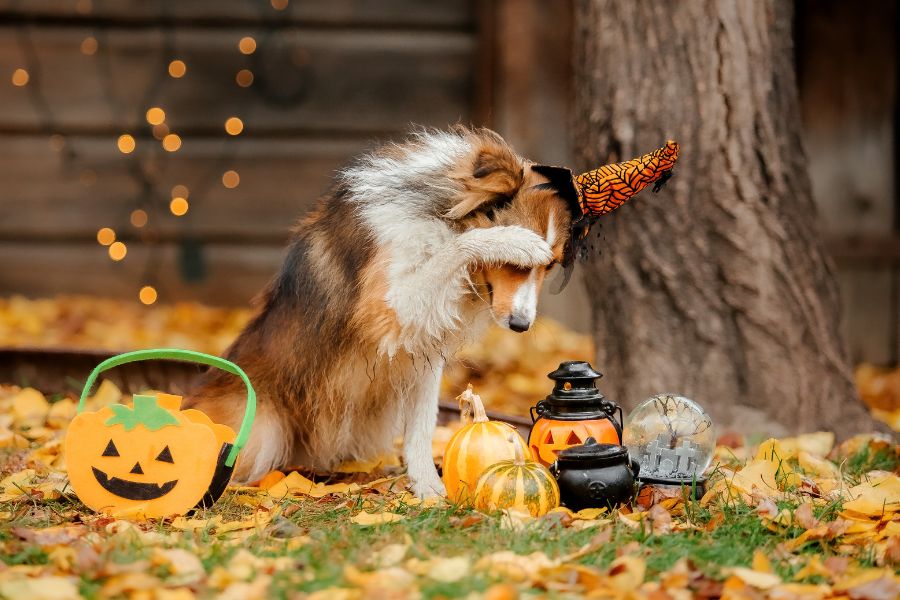
Halloween is full of fun for humans but for pets, it can be downright frightening. Flashing lights, loud noises, and unfamiliar costumes can all trigger Halloween pet anxiety, leaving even the calmest pets on edge. Understanding how to spot the signs of stress and when to seek veterinary care for anxious pets can help keep your furry friend safe and comfortable this spooky season.
What Causes Halloween Anxiety in Pets?
Halloween creates an unusual environment that can confuse or frighten animals. Common triggers include:
- Loud noises: Doorbells, fireworks, and screaming trick-or-treaters can overwhelm pets.
- Costumes and masks: Pets rely on facial recognition and familiar scents — masks disrupt both.
- Decorations: Moving lights, animatronics, or spooky sounds can appear threatening.
- Frequent visitors: Constant knocks or doorbell rings can heighten anxiety.
Even pets who seem social can become uneasy when their routine changes suddenly. Understanding these triggers is the first step in managing Halloween pet anxiety effectively.
Common Signs of Pet Stress During Halloween
Pets express anxiety in many subtle ways. Recognizing these early can prevent panic or harmful behavior. Watch for these pet stress signs:
- Excessive panting or drooling
- Hiding or trying to escape
- Whining, barking, or growling
- Pacing or restlessness
- Loss of appetite
- Shaking or trembling
- Accidents in the house
If your pet displays several of these behaviors, it’s time to take extra precautions or schedule a checkup with your vet. Persistent or intense stress may indicate that professional pet anxiety treatment is necessary.
How to Calm Pets During Halloween
Helping your pet stay relaxed during Halloween is possible with the right approach. Here are effective ways to calm pets during Halloween:
1. Create a Safe Space
Designate a quiet room with familiar toys, blankets, and water. Close the blinds and play soothing music to muffle outdoor sounds.
2. Stick to Routine
Feed, walk, and play with your pet at the usual times. Predictable schedules reduce anxiety and provide comfort.
3. Use Calming Aids
Natural options such as pheromone diffusers, anxiety wraps, or herbal supplements can help some pets. Always check with your veterinarian before use.
4. Keep Pets Away from the Door
Avoid letting your pet greet trick-or-treaters. The constant activity and noise may trigger fear or accidental escapes.
5. Avoid Costumes if They Cause Distress
While pet costumes are cute, not every pet enjoys them. If your pet seems uncomfortable, skip the outfit.
When to See a Veterinarian for Pet Anxiety
Occasional nervousness is normal, but severe reactions may require professional help. You should visit a vet if your pet:
- Shows ongoing stress after Halloween ends
- Refuses to eat or drink
- Exhibits aggressive behavior
- Self-harms (licking, chewing, or scratching excessively)
- Experiences digestive upset linked to anxiety
Your vet may suggest behavior modification, calming medications, or supplements to ease anxiety. In some cases, they may refer you to a certified animal behaviorist for expert care.
What to Expect During a Veterinary Visit for Anxious Pets
When you bring your pet in for veterinary care for anxious pets, here’s what typically happens:
- Behavioral Assessment: The vet reviews your pet’s history, symptoms, and potential triggers.
- Physical Examination: They’ll rule out medical causes like pain or illness that may mimic anxiety.
- Treatment Plan: Depending on severity, the vet may recommend environmental changes, training techniques, or anxiety-relief medication.
- Follow-Up Support: Regular check-ins help track progress and adjust treatment as needed.
Many veterinary clinics now use fear-free handling techniques, which help reduce stress during exams and build trust between pets and caregivers.
Tips for a Stress-Free Halloween with Pets
To make Halloween safer and more enjoyable for your pet:
- Keep candy and chocolate far out of reach — even small amounts can be toxic.
- Avoid glow sticks or costume accessories that could be chewed or swallowed.
- Microchip and ID your pet — frightened animals sometimes bolt out of open doors.
- Tire your pet out earlier in the day with exercise and playtime.
- Reward calm behavior with gentle praise and treats.
These small steps go a long way toward preventing Halloween pet anxiety and ensuring everyone enjoys the festivities peacefully.
Halloween can be a stressful time for our furry friends, but with awareness and preparation, you can minimize fear and keep your pet calm. Recognize the signs of pet stress, provide a safe environment, and don’t hesitate to consult your veterinarian if anxiety escalates. For compassionate pet anxiety treatment in Seminole, FL, professional veterinary care can make all the difference — helping your pet feel secure and happy, even on the spookiest night of the year.
FAQs
Q1: What causes my pet to panic during Halloween?
Ans: Loud noises, flashing lights, and unfamiliar costumes often confuse pets, making them anxious or fearful.
Q2: How can I calm my dog during Halloween fireworks?
Ans: Create a quiet room, use soothing sounds, and comfort your pet with familiar items or pheromone sprays.
Q3: Should I give my pet medication for Halloween anxiety?
Ans: Only if prescribed by a veterinarian after a behavioral assessment — never use human medication.
Q4: Can cats experience Halloween anxiety, too?
Ans: Yes, cats are highly sensitive to changes in sound and environment, and may hide or stop eating when anxious.
Q5: How soon should I visit a vet for my anxious pet?
Ans: If anxiety persists beyond Halloween or interferes with eating, sleeping, or behavior, schedule a vet visit promptly.
Related Articles