

Maximizing Your Pet's Health: The Power of Preventative Care
Preventative care is the most surefire way to maximize health and wellness in your furry companion. By being proactive in the prevention and prompt treatment of disease, we are able to keep your pet healthy, thriving, and by your side for as many fruitful years as possible.
Examinations
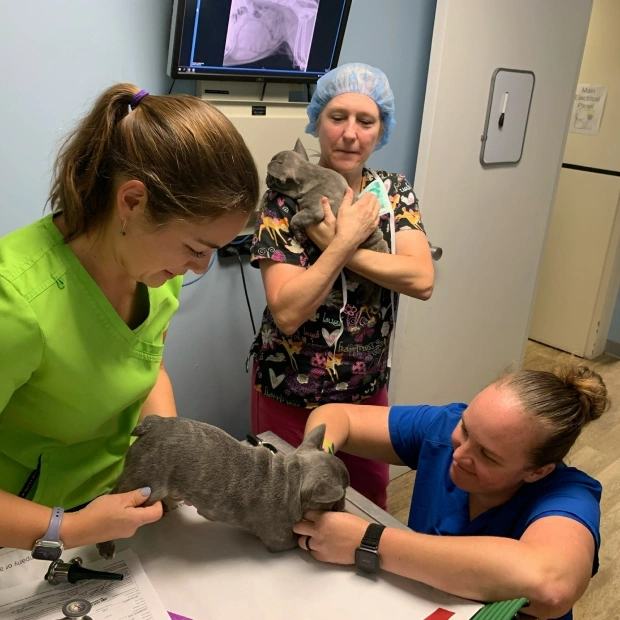
Scheduling regular wellness exams is one of the best, if not the best, thing you can do for your pet. Unlike humans, pets can’t tell us how they are feeling. This means it’s up to us to make sure they are as healthy as possible! At Oakhurst Veterinary Hospital, our veterinarians are highly trained to perform the most comprehensive nose-to-tail examinations. This gives us the opportunity to detect any abnormalities or unforeseen conditions.
Annual or semi-annual visits are preventive and recommended for all pets. Your pet’s veterinarian will make a recommendation for your pet based on your pet’s age and health status.
Vaccinations
Vaccines protect pets from life-threatening conditions. At Oakhurst Veterinary Hospital, we follow AAHA and AAFP guidelines for vaccination of dogs and cats. We provide core vaccines that are recommended for all pets, and non-core vaccines that are recommended for some pets based on age, lifestyle, and risk of exposure. Your pet’s veterinarian will discuss which non-core vaccines are beneficial to your pet’s complete wellness.
Core Vaccines
Dogs:
Rabies, Distemper, Hepatitis, Parvo and ParainfluenzaCats:
Rabies, Feline Viral Rhinotracheitis, Calicivirus, and PanleukopeniaNon-Core Vaccines
Dogs:
Leptospirosis (highly recommended by the University of Florida and our team as it is transmissible to humans), Bordetella, Lyme and Canine InfluenzaCats:
Feline Leukemia
Parasite Control
We are here to keep your pet healthy and protected. Fleas, ticks, heartworms, and other parasites put your pet at grave risk for serious, harmful conditions. Some of these pests and conditions are transmissible to you and your family, too! Our veterinarians will recommend a beneficial preventive program for your pet based on lifestyle and risk factors. Be prepared to discuss parasite control at your pet’s wellness visit!
Fleas
Fleas can cause minor to life-threatening conditions in your pet, ranging from severe itching, irritation, and allergies to disease and tapeworms. Dogs, cats, and pocket pets are at-risk, so be sure to keep your pet on monthly preventives year round. This will protect you and your family as well.
Give us a call if you need assistance controlling or eliminating fleas on your pet or in your home.
Ticks
Ticks are pesky parasites that can lead to serious, deadly diseases such as tick paralysis, Lyme disease, ehrlichiosis, Rocky Mountain spotted fever, and babesiosis. Regular prevention is a safe and effective way to control ticks and the conditions they carry. This is true for indoor pets, too! Let us know right away if you notice your pet develops a cough, joint pain, difficulty breathing, weakness, fever, or has a lessened appetite, weight, energy, or coordination.
If you find a tick on your pet, don’t panic! Certain preventives actually kill ticks after they’ve come in contact with your pet. As an added measure of protection, we recommend checking your pet for ticks during regular grooming and when they come inside.
Heartworms
Mosquitos transmit heartworm infection, which is deadly and difficult to treat. Heartworms cause irreversible damage to the blood vessels, heart, and lungs. Prevention is critical as symptoms often do not appear until disease progression is severe.
In dogs, symptoms of heartworm disease include coughing, weight loss, difficulty breathing, fatigue, and a swollen abdomen. If left untreated, heartworms can also cause liver failure, which is usually fatal if surgical intervention does not occur right away.
Cats are less susceptible, however, infection is still possible and diagnosis is more difficult. In fact, as little as two adult heartworms can wreak havoc on your cat’s health! Heartworm-associated respiratory disease (HARD) is a syndrome that presents symptoms similar to asthma or allergic bronchitis, such as coughing, wheezing, panting, vomiting, loss of appetite and weight, and rapid or difficult breathing.
Treating heartworm disease is lengthy, costly, and painful for your pet. That’s why we always recommend year round prevention to keep your pet safe. A majority of heartworm preventives also control other parasites such as roundworms, hookworms, whipworms, ear mites, fleas, and ticks.
Microchip Identification
Microchipping is a simple, safe, and effective way to help ensure your pet can always find their way back to you. That’s why the medical team at Oakhurst Veterinary Hospital recommends microchipping for all pets. While collars and ID tags are great first lines of defense, microchips provide a permanent form of identification—because when it comes to protecting your pet, the more ways to identify them, the better.
Once implanted, a microchip lasts a lifetime. If your pet is ever lost, it can be scanned at a veterinary clinic or shelter to quickly reunite you. Oakhurst Veterinary Hospital takes care of registering every microchip we place, giving your pet the best possible chance of a safe return home.
If you ever move or change your phone number, don’t forget to update your pet’s microchip information—it’s just as important as updating your own ID!
Behavior Counseling
Correcting behavioral issues is not always easy, and is often frustrating for pets and pet owners. At Oakhurst Veterinary Hospital, we are trained to address behavioral concerns by uncovering the root of the problem. Oftentimes, behavioral issues are a result of an underlying condition and are resolved once the health issue is treated. If a behavioral issue is not due to an underlying condition, we can offer advice, solutions, and assist with training.