

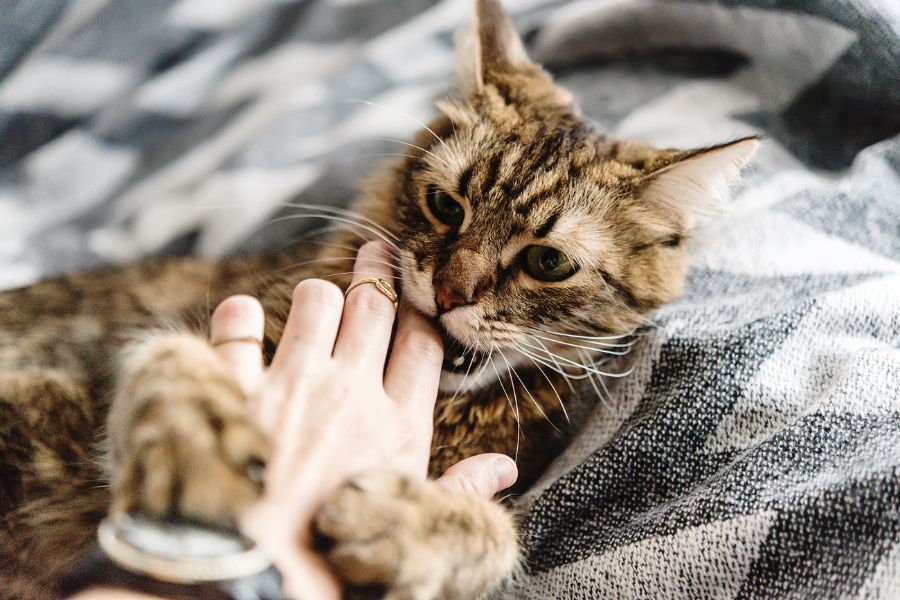
If your cat’s biting has become more frequent or aggressive, you are not alone. Many cat owners experience sudden nips, scratches, or unexpected attacks from otherwise loving pets. Understanding why cats bite is the first step toward fixing the behavior and keeping both you and your cat safe.
In this guide, we explain the most common reasons behind cat biting, how to tell the difference between playful and aggressive bites, and what you can do to stop it. You will also learn when biting may signal a medical issue and when it is time to see a veterinarian.
Why Do Cats Bite Their Owners?
Cats bite for many reasons. Unlike dogs, cats often use biting as a form of communication. They may be trying to tell you they feel stressed, overstimulated, or simply want space.
Here are the most common reasons for cat biting:
1. Play Aggression
Play aggression is one of the most common causes of cat biting. This usually happens when cats treat your hands or feet like prey.
Signs of play aggression include:
- Dilated pupils
- Tail twitching
- Pouncing behavior
- Gentle to moderate bites
Kittens are especially prone to this behavior. If they were separated from their littermates early, they may not have learned proper bite inhibition.
2. Overstimulation During Petting
Some cats enjoy petting, but only for a short time. When they have had enough, they may bite to signal that they want you to stop.
Common warning signs before overstimulation biting:
- Tail flicking
- Flattened ears
- Skin rippling
- Sudden body tension
Learning your cat’s body language can help prevent bites before they happen.
3. Fear or Anxiety
Fearful cats often bite as a defense mechanism. If your cat feels trapped or threatened, biting may be their only way to escape.
Situations that may trigger fear biting:
- Loud noises
- New people or pets
- Vet visits
- Sudden movements
Fear-based cat biting tends to be more intense and may cause deeper wounds.
Medical Reasons for Cat Biting
Sometimes, cat biting behavior is linked to pain or illness. If your cat suddenly starts biting without a clear reason, it may be time for a veterinary checkup.
Possible medical causes include:
- Dental disease
- Arthritis
- Injuries
- Skin conditions
- Neurological issues
Pain can make even the sweetest cat react aggressively. If biting appears suddenly, always rule out health problems first.
How to Tell the Difference Between Playful and Aggressive Biting
Understanding the type of cat biting helps you choose the right solution.
Playful Biting
- Gentle pressure
- No growling or hissing
- Occurs during playtime
- Relaxed body posture
Aggressive Biting
- Hard bites that break skin
- Growling or hissing
- Stiff body posture
- Ears pinned back
Aggressive biting should be taken more seriously and addressed quickly.
How to Stop Cat Biting
If your cat’s biting behavior is becoming a problem, these practical steps can help reduce it.
1. Use Interactive Toys
Never use your hands as toys. Instead, use:
- Wand toys
- Laser pointers
- Feather toys
- Puzzle toys
This teaches your cat to target toys instead of your hands.
2. Watch for Warning Signs
Cats usually give subtle warnings before biting. Learn to recognize these signs and stop interaction early.
Common warning signals:
- Tail flicking
- Ears turning sideways
- Sudden stillness
- Pupils dilating
Stopping before the bite helps reinforce calm behavior.
3. Provide Enough Playtime
Many cats bite out of boredom. Daily exercise helps reduce pent-up energy.
Try:
- Two play sessions daily
- 10 to 15 minutes each
- Interactive hunting style games
This helps satisfy your cat’s instincts.
What Not to Do When Your Cat Bites
Avoid these common mistakes when dealing with cat biting:
Do Not Punish Your Cat
Punishment can make your cat fearful and increase aggressive behavior.
Avoid:
- Yelling
- Hitting
- Spraying water
These methods undermine trust and often worsen biting.
Do Not Pull Your Hand Away Quickly
Pulling away can trigger your cat’s hunting instinct. Instead:
- Stay still
- Slowly move your hand away
- Redirect with a toy
This helps prevent escalation.
How to Prevent Cat Biting in Kittens
Training kittens early helps prevent biting later in life.
Tips for kittens:
- Avoid hand play
- Provide chew-safe toys
- Reward gentle play
- Stop interaction when biting starts
Kittens learn quickly with consistent training.
When Cat Biting Becomes Dangerous
Some cat bites are more serious than others. You should seek veterinary guidance if:
- Biting becomes frequent
- Bites break skin
- Behavior changes suddenly
- Your cat shows signs of pain
- Aggression increases
Cat bites can also cause infections in humans. If bitten deeply, seek medical care promptly.
Tips to Build Trust With Your Cat
Reducing cat biting often involves improving your relationship with your pet.
Helpful tips:
- Respect your cat’s space
- Keep routines consistent
- Offer treats for calm behavior
- Provide quiet resting areas
- Avoid forced interactions
Trust building takes time, but leads to long-term improvement.
Environmental Changes That Reduce Biting
Sometimes small adjustments at home can help:
- Add vertical spaces like cat trees
- Provide hiding spots
- Reduce loud noises
- Use calming pheromone diffusers
- Maintain feeding schedules
A calm environment helps reduce stress-related biting.
How Long Does It Take to Stop Cat Biting?
Every cat is different. Some cats improve within a few weeks, while others may take longer. Consistency is key.
Factors that influence improvement:
- Age of the cat
- Cause of biting
- Training consistency
- Medical conditions
Patience and positive reinforcement produce the best results.
Cat biting can be frustrating, but it is usually your cat’s way of communicating. By understanding the cause, watching body language, and using positive training methods, you can reduce biting and strengthen your bond. If biting becomes severe or sudden, a veterinary evaluation is important to rule out underlying health issues. For professional guidance, contact Oakhurst Veterinary Hospital in Seminole, FL, to help your cat feel safe, healthy, and comfortable.
FAQs
1. Why does my cat bite me gently, then lick me?
Ans: This behavior is often a sign of affection mixed with overstimulation. Your cat may be telling you they have had enough petting.
2. Is cat biting normal behavior?
Ans: Yes, mild cat biting is normal, especially during play. However, frequent or aggressive biting should be addressed.
3. How do I stop my cat from biting my hands?
Ans: Use toys instead of hands, stop play when biting starts, and reward gentle behavior consistently.
4. When should I worry about a cat biting?
Ans: You should be concerned if biting becomes sudden, aggressive, or linked to changes in behavior or appetite.
5. Can medical problems cause cat biting?
Ans: Yes, pain, dental issues, and illness can cause increased cat biting. A veterinary checkup helps rule out health problems.
Related Articles